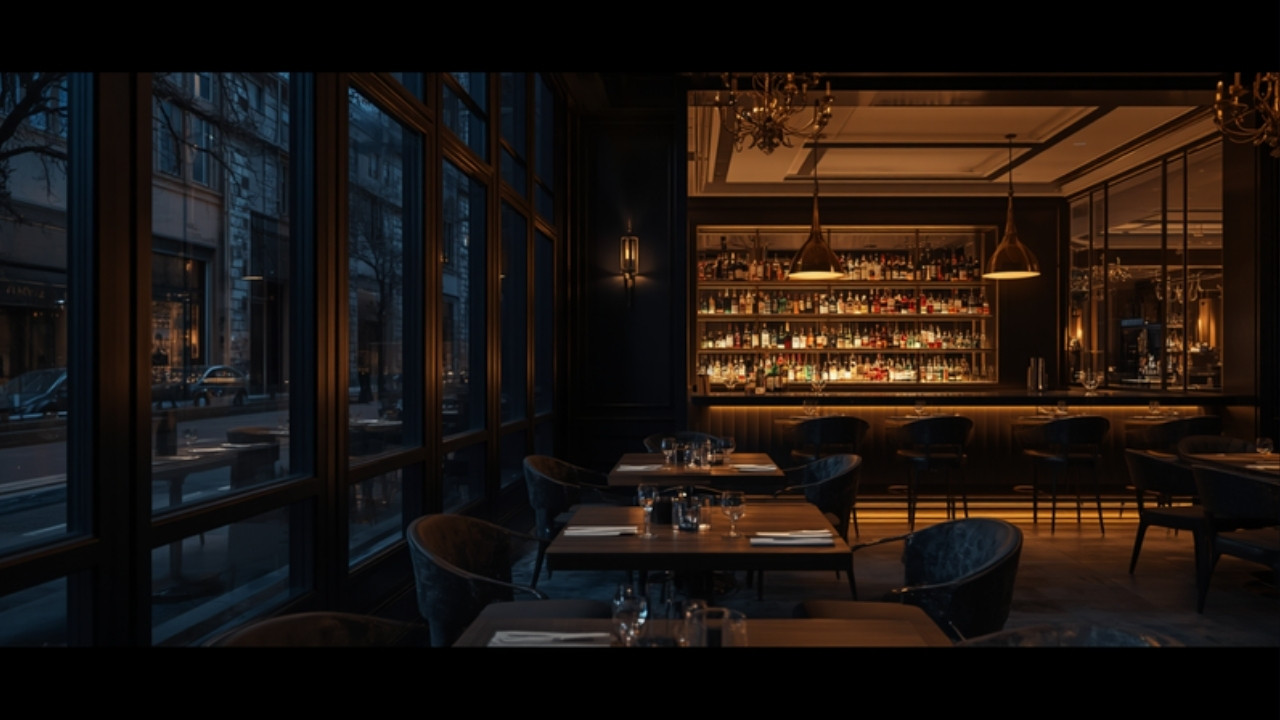
Restaurants and bars are the most romanticized investments in commercial real estate. Everyone knows someone who "knows food" or "loves the nightlife." But lenders have seen this movie before, and it rarely ends well. The failure rate for restaurants is notoriously high. Bars face liquor license risks, liability exposure, and volatile cash flow. Financing these properties requires proving that your operation is not just another statistic.
What Are They, Really?
A restaurant is a manufacturing facility disguised as hospitality. You are producing perishable inventory in real-time, serving it immediately, and hoping customers show up consistently. The real estate—kitchen, dining room, bar, patio—is just the container. The actual business is the brand, the menu, the chef, the manager, and the customer experience.
A bar is similar but more concentrated. Revenue depends on alcohol sales, which carry higher margins but also higher regulatory and liability risk. The customer base is more fickle, the hours are more demanding, and the staff turnover is relentless. From a lender's perspective, a bar is a restaurant with extra risk layers.
How Lenders View Restaurants & Bars
Lenders do not hate restaurants and bars. They hate uncertainty. And these businesses are uncertainty factories. A restaurant's success can change overnight with a bad health inspection, a negative viral review, or the departure of a key chef. A bar's liquor license can be suspended by a single incident. Lenders know that foreclosing on a closed restaurant or bar means selling an empty shell with grease-stained floors and a kitchen full of depreciated equipment.
The Failure Rate Reality
Industry data shows that roughly 60% of new restaurants fail within the first year, and 80% within five years. Lenders are acutely aware of this. They are not betting on your concept; they are betting on your execution, your experience, and your location. If any of those three is weak, the loan is weak.
The Liquor License Variable
For bars and many full-service restaurants, the liquor license is the asset. Without it, the property is just a kitchen and some tables. Liquor licenses are regulated at the state and local level, with caps, transfer restrictions, and moral character requirements. A lender will not fund a bar purchase until they confirm the license is transferable, in good standing, and compliant with local zoning. In some states, license transfers take 6-12 months. This can delay closing indefinitely if not managed upfront.
Cash Flow Volatility
Restaurants and bars do not generate steady monthly rent like an apartment building. They generate cash flow that swings with seasons, holidays, local events, and economic cycles. A beachfront restaurant prints money in July and bleeds cash in February. A downtown bar thrives on Friday nights and struggles on Tuesdays. Lenders average your cash flow over 12-24 months and discount seasonal peaks. They want to see that you can survive the slow months, not just celebrate the busy ones.
What Lenders Require
- Experience Documentation: Lenders want to see that you or your operator have successfully run a restaurant or bar. 3-5 years of direct management experience is the gold standard. If you are an investor with no operational background, you need a seasoned general manager with equity in the deal or a management agreement with a proven operator.
- 3 Years of Financials: P&Ls, balance sheets, and tax returns. If you are buying an existing operation, the seller's books must be clean and verifiable. Cash-heavy businesses need point-of-sale reports to back up tax returns. Underreported cash sales may save taxes but will cost you the loan.
- Liquor License Status: For bars and restaurants with alcohol service, provide the current license, transfer application, state liquor board approval letter, and any compliance history. If the license is restricted (beer and wine only vs. full liquor), explain how that affects revenue.
- Health Department & Permits: Current health inspection scores, grease trap compliance certificates, fire suppression system inspections, and occupancy permits. Any violations must be resolved before closing.
- Lease Terms or Ownership: If leasing, the lease must have 10+ years remaining with renewal options, and landlord consent for the loan. If purchasing, the property must be zoned for restaurant/bar use with adequate parking.
- Equipment & FF&E List: Kitchen equipment, coolers, POS systems, furniture, fixtures. These depreciate fast but are essential to operations. Lenders want to know replacement costs and remaining useful life.
- Concept & Menu Analysis: For new restaurants, lenders may want to see the menu, pricing strategy, and competitive analysis. They are evaluating whether the concept fits the demographic and competition density.
- Insurance: General liability, liquor liability (dram shop), workers compensation, and property insurance. Liquor liability is non-negotiable for bars.
- Personal Guarantee & Liquidity: Expect a full personal guarantee. Post-closing liquidity of 6-12 months debt service is standard. Net worth often must equal or exceed the loan amount.
How to Package the Loan Application
- Executive Summary: Concept, location, borrower experience, loan request, and why this concept works in this market. Include photos, renderings, and site plans.
- Business Plan: Menu, pricing, target demographic, service style (fast casual, fine dining, bar, nightclub), and competitive differentiation.
- Financial History: 3 years of actuals if buying existing; 24-month monthly projections if new. Include assumptions for foot traffic, average ticket, labor costs, and food cost percentage.
- Liquor License Package: Current license, transfer application, state approval timeline, and compliance history.
- Real Estate & Lease Documentation: Purchase agreement or lease with 10+ years remaining, landlord estoppel, zoning confirmation, and parking analysis.
- Permits & Compliance: Health inspections, grease trap compliance, fire suppression, ADA compliance, and occupancy certificates.
- Market Analysis: 1-mile and 3-mile demographic profile, competition mapping, traffic and foot traffic analysis, and demand justification.
- Management & Staffing Plan: Organizational chart, key personnel resumes, hiring timeline, and training program.
- Use of Funds: Buildout costs, equipment, furniture, inventory, working capital, pre-opening marketing, and reserves.
- Exit Strategy: Refinance timeline, sale assumptions, or business cash flow payoff plan.
Peculiarities of Underwriting
- Food Cost & Labor Percentages: Lenders benchmark food costs at 28-35% of revenue and labor at 25-35%. If your projections show 20% food costs, the lender will question your math or your menu.
- Rent Ratio: Rent should not exceed 6-10% of gross revenue for a restaurant. Higher than that, and the location is eating your profits before you serve a single meal.
- EBITDA Add-Backs: Owner salary, personal meals, and non-cash expenses are added back. But if the owner is also the chef and leaving, the lender will deduct the cost of replacing them.
- Seasonality Adjustments: Lenders will annualize your slow season and stress-test your debt service coverage ratio at the lowest monthly revenue, not the average.
- Liquor License as Collateral: In some states, the liquor license can be pledged as collateral. In others, it cannot. Know your state's rules before structuring the loan.
Mistakes to Avoid
- Falling in Love with the Concept: Your grandmother's pasta recipe is not a business model. Lenders do not care about your passion. They care about the numbers. Validate demand with market research before you ask for money.
- Underestimating Buildout Costs: Restaurant construction always costs more than quoted. Grease traps, commercial hoods, fire suppression, and ADA upgrades add up. Budget 20-30% contingency on buildout costs.
- Ignoring the Importance of Parking: In suburban markets, inadequate parking kills restaurants. You need 1 space per 3-4 seats minimum. If parking is shared, get written confirmation of allocation.
- Buying Based on the Current Chef: If the seller is the chef and leaving, the restaurant's value may walk out the door. Structure the deal with an earnout or retention bonus tied to the chef staying.
- Neglecting Liquor License Timing: In states with license quotas, transfers can take months. Start the transfer process before you apply for the loan, or you will delay closing and risk losing the deal.
- Overlooking Dram Shop Liability: Bars face enormous liability for overserving patrons. One incident can trigger a lawsuit that exceeds insurance limits. Maintain strict pour policies and train staff relentlessly.
- Choosing a Location Based on Cheap Rent: Cheap rent usually means cheap location. A restaurant in a dead-end strip with no visibility will fail even with great food. Pay for traffic, not just square footage.
How to Research the Best Locations
- Demographics: Match the concept to the neighborhood. Fine dining needs households with $100K+ income. Fast casual thrives in mixed-income areas with families. Bars need young professionals or college crowds. Use Census data, ESRI reports, and Placer.ai foot traffic analytics.
- Foot Traffic & Visibility: Restaurants need visibility and accessibility. Corner locations with signage exposure outperform hidden suites. Bars can succeed in second-floor locations if the concept is destination-driven (nightclub, live music).
- Competition Density: Map every competitor in a 1-mile radius. Too many similar concepts = market saturation. But zero competition may mean there is no demand. Look for complementary competitors, not just identical ones.
- Parking & Access: Suburban and family concepts need dedicated parking. Urban concepts can rely on street parking, transit access, or valet. Ensure parking matches your target customer.
- Daytime vs. Nighttime Population: A downtown location with 10,000 office workers but 200 residents will thrive for lunch and fail for dinner. A residential neighborhood with no offices will struggle for lunch but excel for dinner. Match your hours to the population rhythm.
- Tenant Mix: In a shopping center, co-tenants matter. A restaurant next to a grocery store and gym gets spillover traffic. A restaurant next to a dentist and tax preparer does not.
Final Thoughts
Restaurants and bars are not for the faint of heart. They demand operational excellence, relentless attention to detail, and a tolerance for risk that most investors lack. But for those who master the model, the returns can be exceptional. The key is approaching financing with the same rigor you approach the menu. Lenders will fund great operators in great locations with great numbers. Everything else is just a dream.