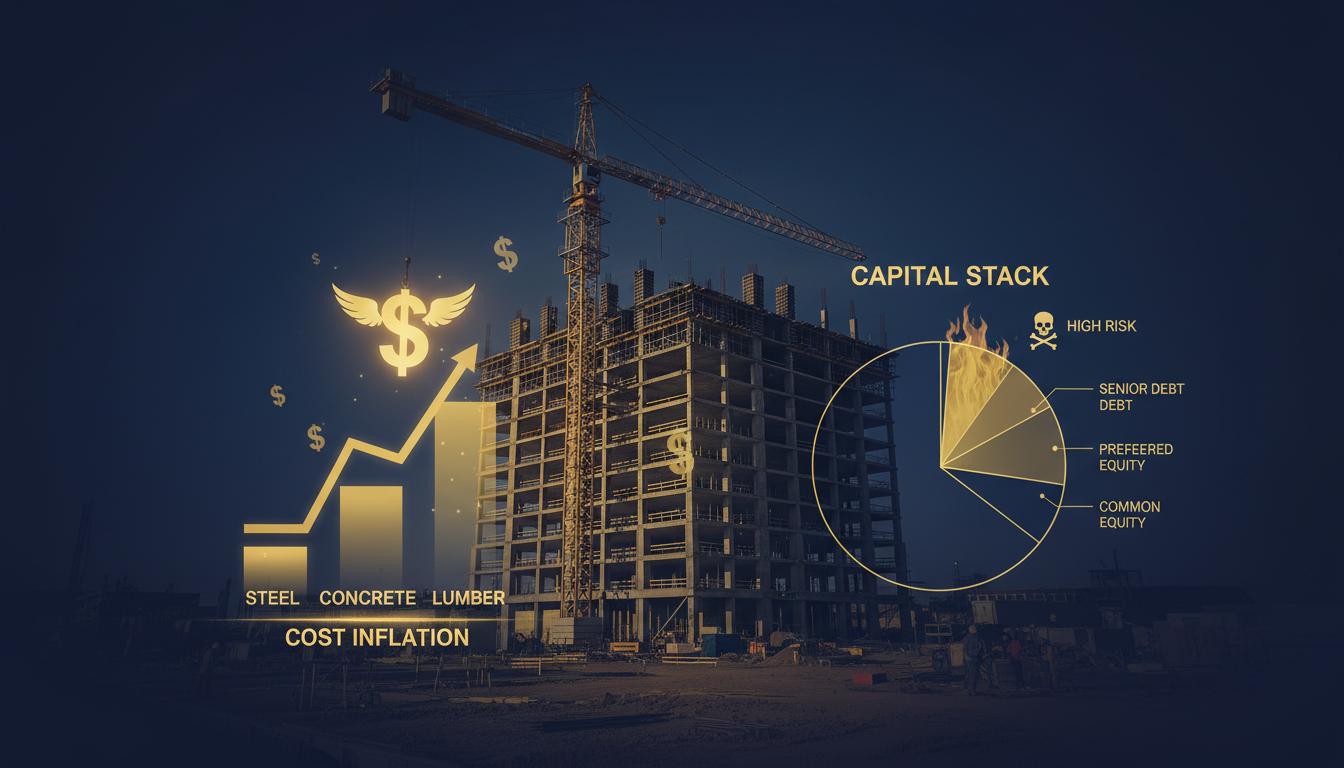
Construction cost inflation has fundamentally changed project economics. Over the past three years, construction costs have risen 25-40% across most major markets, driven by labor shortages, material price volatility, supply chain disruptions, and increased regulatory costs.
For developers, this creates significant capital stack risk. Projects that were underwritten at 2021-2022 cost assumptions are now facing budget overruns, equity shortfalls, and in some cases, project failure. In this article, Fintek Capital LLC examines construction cost inflation, capital stack risk, and how developers can structure financing to absorb cost volatility.
The Current Cost Environment
Construction costs vary significantly by market and project type, but national trends show: labor costs up 18-25% since 2022, concrete and steel up 30-45%, lumber and framing materials up 20-35%, MEP (mechanical, electrical, plumbing) up 25-40%, and sitework and utilities up 15-30%.
Capital Stack Risk
Capital stack risk refers to the potential for cost overruns to erode equity, trigger loan covenant violations, or force additional capital contributions. Key risks include: equity erosion (cost overruns consume equity first), covenant violations (LTV or LTC ratios may exceed lender limits), funding shortfalls (construction loans may not cover final costs), and project delays (cost issues cause delays, which increase carrying costs).
How to Structure Financing for Cost Inflation
1. Increase Contingency Reserves
Traditional contingency reserves of 5-8% are no longer sufficient. Savvy developers are budgeting 12-18% for contingencies, particularly for projects with long construction timelines or complex site conditions.
2. Structure Interest Reserves
Interest reserves protect developers when construction delays push project timelines beyond the initial forecast. Fintek Capital typically structures 12-18 month interest reserves to cover realistic overrun scenarios.
3. Lock in Material Pricing Early
Where possible, lock in material pricing through procurement contracts before construction begins. This transfers price risk to suppliers and provides budget certainty.
4. Maintain Equity Cushion
Avoid maxing out leverage. Maintaining a 15-25% equity cushion provides a buffer for cost overruns without requiring additional capital contributions.
Conclusion
Construction cost inflation is a reality that developers must plan for. Contact Fintek Capital LLC to discuss construction financing that accounts for cost volatility.