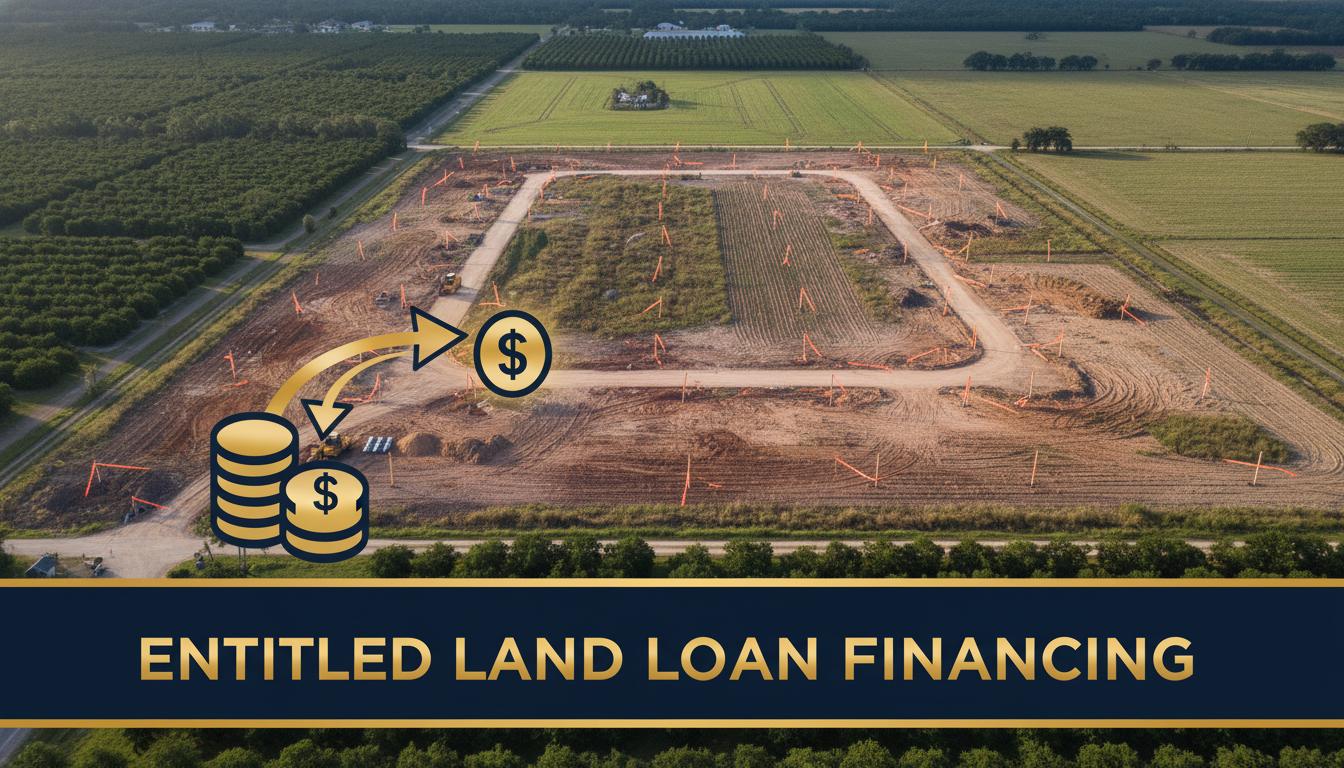
Entitled land — property with full development approvals, site plans, and permits in place — is one of the most attractive asset classes in commercial real estate. It offers the highest risk-adjusted returns in the development cycle, with significantly less uncertainty than raw land.
But financing entitled land is not straightforward. Traditional lenders often hesitate because there is no cash flow, and construction has not yet begun. In this article, Fintek Capital LLC explains what entitled land loans are, how they work, and what developers need to know.
What Is Entitled Land?
Entitled land has completed the full entitlement process: zoning approval, site plan approval, environmental clearance, utility capacity confirmation, and building permit issuance. This means the developer can begin construction immediately.
Why Entitled Land Is Attractive
Three reasons: reduced risk (approvals are in place), speed to market (construction can begin immediately), and higher returns (entitlement value is created but not yet priced into the market).
How Entitled Land Loans Work
Entitled land loans are typically structured as bridge financing: 50-70% LTV, 12-36 month terms, 10-14% interest rates, interest-only payments, and non-recourse or limited recourse. The exit strategy is typically construction financing or sale to a homebuilder.
What Lenders Look For
Lenders focus on: entitlement quality (are approvals final or conditional?), market demand (is there demonstrated demand for the end product?), borrower experience (track record with similar projects), and exit clarity (clear path to construction financing or sale).
Conclusion
Entitled land loans provide the capital bridge between entitlement completion and construction start. Contact Fintek Capital LLC to discuss entitled land financing.